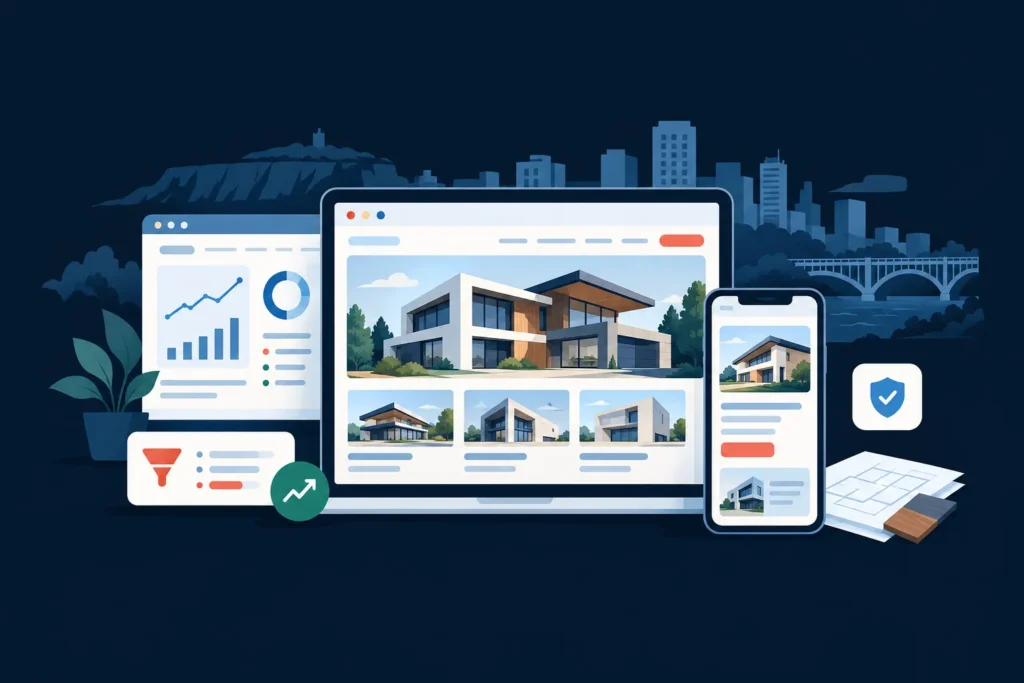
A high-performing website for a Hamilton home inspector should do more than explain inspection services. It should answer a homeowner’s urgent questions, establish professional credibility, make booking simple, and help local prospects find the business when they search for an inspector in Hamilton.
That is the purpose of effective home inspector web design in Hamilton: turning local search traffic into qualified inspection enquiries through clear service pages, visible trust signals, fast mobile experiences, and conversion-focused booking paths.
Why Home Inspector Website Design Matters in Hamilton
Home inspections are a trust-based purchase. Buyers and homeowners are inviting a professional into a property and relying on the resulting information to make important financial decisions. A dated, unclear, or difficult-to-use website can create doubt before a prospect ever calls.
Hamilton home inspectors also serve a varied market. A website may need to speak to buyers viewing older homes in the North End, homeowners in the Westdale area, clients purchasing newer properties near Binbrook, landlords managing rentals, or families moving throughout the surrounding communities. Each visitor may arrive with a different concern, but the website should make the next step obvious for all of them.
A strong website helps answer questions such as:
- What types of inspections does the company provide?
- Which Hamilton areas and nearby communities are served?
- What is included in an inspection?
- What does the client receive after the appointment?
- How experienced, qualified, and insured is the inspector?
- How quickly can the visitor request an appointment?
When those answers are easy to find, the site can support both local SEO and better conversion rates without relying on exaggerated claims or aggressive sales language.
The Essential Structure for a Hamilton Home Inspector Website
A home inspector website should be organized around the questions people ask before booking. The following structure is a practical starting point for a Hamilton inspection business.
1. A focused home page
The home page should immediately communicate the service, location, and next step. A useful opening section might explain that the business provides residential home inspections in Hamilton and surrounding areas, followed by a prominent button such as Request an Inspection or Check Availability.
The first screen should not force visitors to search for a phone number or navigate through a generic welcome message. It should also avoid making unsupported promises such as guaranteed savings, perfect reports, or guaranteed real estate outcomes.
2. Dedicated inspection service pages
Each major service deserves enough space to explain its purpose, process, and ideal customer. Depending on the business, this may include:
- Pre-purchase home inspections
- Pre-listing inspections
- New construction or warranty inspections
- Condominium inspections
- Maintenance inspections
- Follow-up or consultation services
Dedicated pages are useful for visitors and search engines because they provide a relevant destination for specific searches. A buyer looking for a pre-purchase inspection should not have to find that information buried inside a single services paragraph.
3. A clear inspection process
Explain what happens from the first enquiry to the delivery of the report. A simple four-step process can reduce uncertainty:
- Request a time and provide the property details.
- Receive confirmation, preparation instructions, and pricing information.
- Attend the inspection and ask questions where appropriate.
- Receive the completed report and understand the recommended next steps.
The exact process should reflect how the inspector actually operates. Accuracy is more persuasive than polished but vague copy.
4. About and credentials content
The About page should introduce the inspector as a professional, not simply list a company name. Include relevant training, certifications, experience, insurance information where appropriate, associations, and the standards or inspection scope used by the business.
Use real photographs whenever possible. A professional portrait, inspection equipment, and authentic images from the field generally create more confidence than generic stock photography.
5. A useful FAQ section
Frequently asked questions can address practical concerns before they become booking objections. Consider questions about how long an inspection takes, whether clients can attend, what areas are inspected, when the report is delivered, how condos differ from detached homes, and what the client should do before the appointment.
Trust Signals That Matter to Home Inspection Clients
Home inspectors should treat trust as a design feature. A prospective client may compare several businesses quickly, so credibility information should be visible without overwhelming the page.
- Real inspector photographs and team information
- Relevant certifications, training, and professional memberships
- Clear explanation of the inspection scope
- Testimonials presented with permission and accurate attribution
- Links to legitimate review profiles
- Sample report pages or a redacted report preview
- Professional service-area and contact information
- Transparent explanation of what happens after booking
Do not manufacture reviews, display unverified badges, or imply affiliations that do not exist. A smaller inspection company with clear, verifiable information can appear more credible than a larger-looking site filled with vague claims.
Conversion Design for More Inspection Bookings
The goal of a home inspector website is not merely to generate visits. It is to create a comfortable path from research to enquiry. Every important page should provide a next step that matches the visitor’s level of readiness.
Use specific calls to action
“Learn more” is less useful than an action that describes the outcome. Stronger examples include:
- Request a Hamilton home inspection
- Ask about availability
- Get inspection pricing
- Speak with an inspector
- Download the inspection preparation guide
Place the primary action near the top of the page, after key service explanations, and near the bottom. On mobile devices, a click-to-call option can be particularly useful for visitors who need an answer before submitting a form.
Keep the enquiry form short
A first-contact form usually needs only the information required to respond properly. Useful fields may include the visitor’s name, email address, phone number, property location, inspection type, preferred date, and a short message.
Long forms can discourage people who are still comparing providers. If a more detailed intake process is necessary, use a short enquiry form first and gather additional information after the initial response.
Make pricing understandable
Inspection pricing can vary according to property type, size, location, and service scope. If the business does not publish fixed prices, explain what affects the quote and invite visitors to request a tailored estimate. Avoid presenting a suspiciously low starting price without explaining exclusions.
A Local SEO Foundation for Hamilton Inspectors
Local SEO for a Hamilton inspection business begins with clear, consistent information rather than repeating the city name on every page. The website should accurately describe the main service area and the communities the inspector genuinely serves.
Useful local SEO improvements include:
- A descriptive title and introduction that identify the inspection service and Hamilton service area
- A dedicated contact page with consistent business details
- Natural references to Hamilton communities and nearby service areas where relevant
- Service pages that reflect the actual inspection types offered
- A claimed and accurately maintained Google Business Profile
- Helpful educational content answering real client questions
- Fast, mobile-friendly pages with clear navigation
Do not create thin pages for every street or neighbourhood. A page about Ancaster, Stoney Creek, Dundas, or Waterdown should exist only when it offers genuinely useful local information and reflects the company’s service coverage.
For a broader local search strategy, see WebDesignGTA.com’s Hamilton SEO services. A coordinated approach can connect technical improvements, service-page content, Google Business Profile work, and local authority building.
Mobile UX for Home Inspectors
Many prospective clients will discover an inspector while browsing on a phone between appointments, during a home search, or after receiving a recommendation. Mobile usability therefore has a direct connection to enquiries.
A mobile-friendly site should provide:
- Readable text without horizontal scrolling
- Buttons large enough to tap comfortably
- A visible phone number and enquiry action
- Short paragraphs and scannable headings
- Compressed images that do not slow down the page
- Forms that work correctly on mobile keyboards
- Simple navigation with no unnecessary pop-ups
Test the complete booking journey on several phones. A website can look attractive on a desktop and still lose leads because its form is difficult to complete or its phone number is not clickable.
The H.E.A.R. Framework for Inspector Website Content
A practical content framework for home inspectors is H.E.A.R. It gives every major page a useful balance of information and conversion support:
- Help: Explain the client’s problem, such as uncertainty about a property’s condition.
- Evidence: Show credentials, inspection scope, experience, reviews, and real process details.
- Action: Provide a clear way to request an appointment or ask a question.
- Reassurance: Explain what happens next, what the client receives, and what the service does not promise.
For example, a pre-purchase inspection page could explain why buyers request an inspection, outline the areas reviewed, show a redacted report example, provide a booking button, and answer questions about attendance and report delivery. This is more useful than a page that simply repeats “professional home inspections” several times.
Content Ideas That Help Hamilton Homeowners
Educational content can attract people earlier in the decision process and demonstrate expertise before they contact the company. Topics should be based on the inspector’s real knowledge and the questions clients regularly ask.
- What Hamilton buyers should understand before booking a home inspection
- Common inspection considerations in older homes
- What to expect during a condominium inspection
- Questions to ask before choosing a home inspector
- How to prepare a property for an inspection
- What a home inspection report can and cannot tell you
- Maintenance issues homeowners should monitor between inspections
These articles should link naturally to the relevant service page. They should educate rather than create fear, and they should avoid presenting an inspection as a substitute for specialized engineering, legal, environmental, or other professional advice when those services are outside the inspector’s scope.
What to Look for in a Hamilton Web Designer
The right Hamilton home inspectors website design partner should understand both local service businesses and the inspection customer journey. Ask prospective designers how they will organize service pages, present credentials, improve mobile booking, handle technical SEO, and measure enquiries.
Review the agency’s website design portfolio for evidence of clear layouts, strong calls to action, responsive design, and industry-appropriate presentation. You can also explore the dedicated Hamilton web design service to see how a local business website project can be planned.
A good project should begin with discovery: understanding the inspection business, service area, ideal clients, competitors, existing website data, and operational capacity. The final website should make it easier to manage enquiries, not create a booking volume the business cannot handle.
Ready to Build a More Trustworthy Inspection Website?
For a Hamilton inspector, a website should make expertise easy to understand and booking easy to complete. The strongest results come from combining accurate service information, local search foundations, credible proof, fast mobile performance, and a clear conversion path.
If your current website is outdated, difficult to update, or failing to turn local visitors into enquiries, contact WebDesignGTA.com for a tailored website plan or quote. We can help map the right pages, conversion opportunities, and local SEO priorities for your inspection business.